Securing Converged IT and OT Networks with Post Quantum Zero Trust Mesh Infrastructure
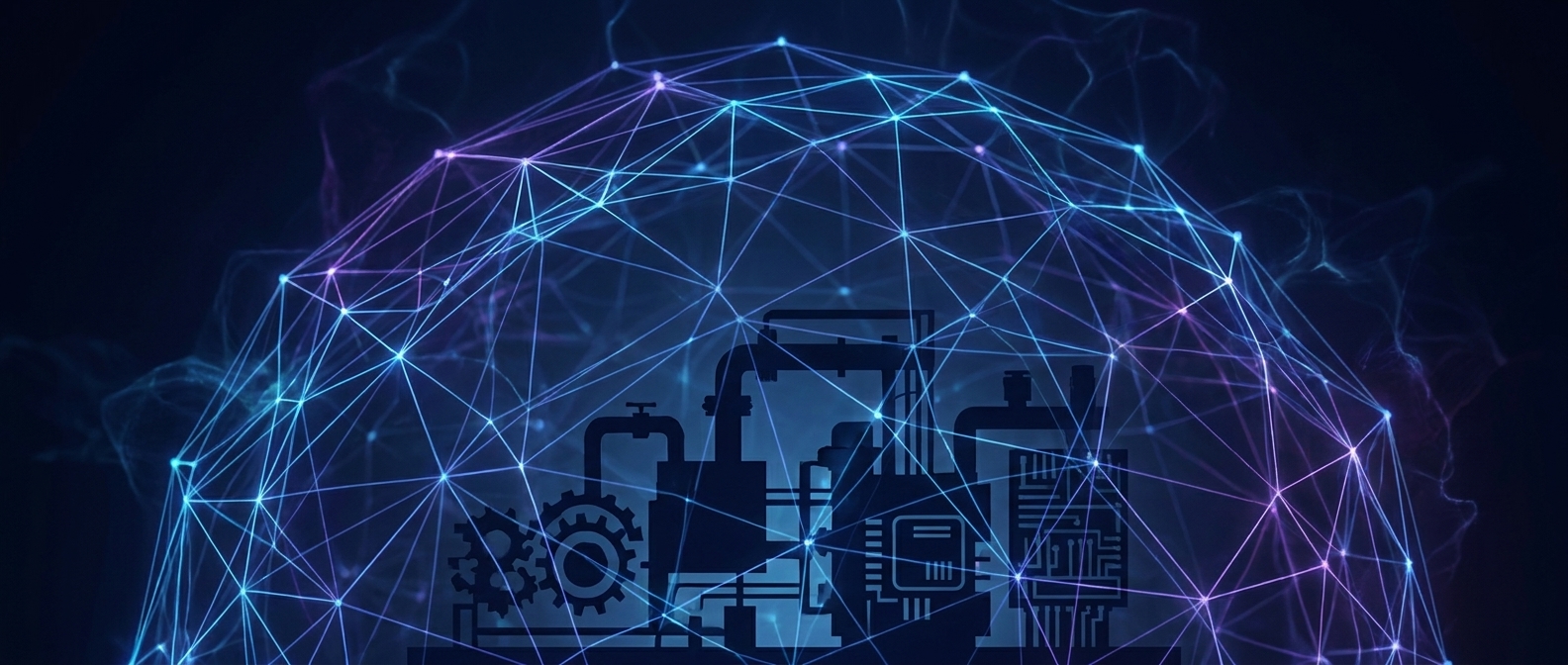
The rapid convergence of Information Technology (IT) and Operational Technology (OT) has quietly dismantled the physical boundaries that once shielded critical infrastructure. For decades, industrial control systems, public utilities, municipal water treatment facilities, and transportation networks relied on physical isolation—the classic "air gap"—as their primary defense against cyber threats.
Today, that isolation is gone. The business mandate for real-time analytics, remote predictive maintenance, and seamless vendor integration has forced these once-isolated systems onto the same physical and logical networks that handle corporate emails, billing, and public-facing internet services. When third-party contractors access municipal systems from unmanaged devices, or legacy Programmable Logic Controllers (PLCs) sit on shared corporate subnets, the entire operational footprint becomes vulnerable to standard enterprise threat vectors.
The traditional security perimeter is dead, yet legacy industrial equipment cannot simply be rewritten or updated to support modern cybersecurity frameworks. To protect critical assets in this hyper-connected landscape, infrastructure architects and CISOs must transition to a security model that assumes breach at every layer. This requires decoupling network trust from physical location, implementing robust cryptographic identities, and enforcing post-quantum zero-trust policies directly at the operational edge.
The Flaw in Legacy Segmentation and Virtual Private Networks
For years, network administrators attempted to solve the IT/OT bridge problem using Virtual Local Area Networks (VLANs) and Virtual Private Networks (VPNs). While these technologies were revolutionary for their time, they were built on an outdated perimeter-security model. Once an identity is authenticated through a VPN, or a device is placed within a specific VLAN, that entity is typically granted broad network visibility. This implicit trust allows attackers to move laterally across networks, escalating privileges from a compromised IT workstation to highly sensitive OT controllers.
Furthermore, traditional VPNs publish their listening ports to the public internet, making them visible to threat actors scanning for entry points. In an industrial environment, where legacy protocols like OPC Classic and early OPC UA variants lack built-in security mechanisms, exposing these controllers to scanning and probing invites disaster.
True zero trust requires a complete paradigm shift: the network must remain entirely dark to unauthorized entities, and trust must be verified continuously at the packet level, regardless of physical or logical network location.
Conflux: Establishing a Quantum-Resistant Meta Air Gap
To address these vulnerabilities, VeilNet introduces Conflux, a secure post-quantum network connector designed to establish identity-authenticated mesh networking across converged environments. Conflux fundamentally redefines how network endpoints interact, replacing the fragile concept of physical isolation with a highly secure, cryptographic "meta air gap."
Unlike traditional networking systems that assign IP addresses and listen on public ports, Conflux operates on a default-deny, zero-visibility principle. Every node within a Conflux mesh remains completely invisible to unauthorized scans. The system achieves this by utilizing identity-authenticated mesh networking, where endpoints must present verified, cryptographically signed post-quantum credentials before any network connection is established.
[ Legacy PLC ] <---> [ Aether Node ] <======== Conflux Mesh Network ========> [ Remote Operator ]
                     (Data Plane)    (Quantum-Resistant, Meta Air Gap Tunnel)
By integrating post-quantum cryptographic algorithms directly into the routing layer, Conflux secures communications against both current threats and future decryption risks. The platform’s quantum-resistant packet routing utilizes state-of-the-art cryptographic primitives to protect metadata and payload data alike. This ensures that even if adversaries capture encrypted traffic today with the intent of decrypting it later using quantum computing, the data remains permanently secure.
The meta air gap created by Conflux ensures that legacy OT devices can communicate across shared physical infrastructure without ever being directly exposed to the host network or the public internet. By establishing outbound-only, ephemeral connections directly to authenticated peers, Conflux renders the physical network layer irrelevant to the security of the operational data.
Aether: The Modern Industrial Data Plane
While Conflux handles the secure, quantum-resistant transit layer, industrial networks require a specialized engine to understand, translate, and secure the operational data itself. This is the role of Aether, the real-time engine that provides the industrial data plane directly above the Conflux network layer.
Industrial systems are notoriously heterogeneous, relying on a patchwork of legacy protocols that were never designed to interact with modern IT networks. Aether acts as the intelligent bridge between these systems, offering native support for:
- OPC UA Integrations: Safely wrapping and translating legacy industrial automation protocols, allowing secure telemetry to flow without exposing the underlying PLC to direct network attacks.
- RESTful API Gateways: Enabling secure, programmatic interaction with modern enterprise systems and cloud services.
- Model Context Protocol (MCP) Integrations: Facilitating secure, real-time data ingestion for advanced analytics and automated control loops at the edge.
Aether resides directly alongside critical OT assets at the edge, acting as a highly secure proxy. When a remote operator or an analytical application requests data from a PLC, the request is received and authenticated by Aether. Because Aether sits on top of the Conflux network layer, it only accepts traffic that has been routed through a valid Conflux tunnel.
Once authenticated, Aether translates the incoming query into the native legacy protocol (such as OPC UA) and forwards it to the controller over a highly localized loopback interface. The controller remains completely isolated from the broader network, protected by a zero-trust wrapper that sanitizes, validates, and encrypts all incoming and outgoing data in real time.
Architectural Deep Dive: Securing a Converged Water Treatment Facility
To understand how Conflux and Aether operate in unison, consider a modern municipal water treatment facility. The facility's SCADA systems and PLCs control critical chemical dosing and filtration processes. To optimize operations, a third-party engineering firm must continuously monitor telemetry from these PLCs, while internal teams require access to execute maintenance tasks.
In a traditional setup, the engineering firm would connect via a corporate VPN, placing their remote workstations on a shared VLAN that contains the SCADA servers. If a contractor's laptop is compromised by malware, that malware can easily scan the subnet, find the vulnerable PLCs, and execute malicious commands directly.
By deploying VeilNet, the municipality eliminates this attack surface:
- Isolation at the Edge: An Aether node is deployed directly alongside the PLCs. This node is configured to communicate locally with the controllers via secure OPC UA.
- Dark Network Overlay: The Aether node is integrated with a Conflux connector, joining an identity-authenticated mesh network. The local PLCs and the Aether node do not have public IP addresses and do not respond to ping requests or port scans.
- Strict Micro-Segmentation: When a remote contractor attempts to access the telemetry, their endpoint must authenticate with the Conflux mesh using multi-factor, post-quantum cryptographic keys.
- Ephemeral Tunneling: Upon successful verification, Conflux establishes an ephemeral, direct tunnel between the contractor's endpoint and the Aether node. No lateral movement is permitted; the tunnel only exposes the specific, translated OPC UA endpoints managed by Aether.
- Continuous Revalidation: The session is continuously validated at the packet level. If the contractor's device health status changes or their session credentials expire, the Conflux tunnel is instantly severed, leaving the OT assets safely hidden behind the meta air gap.
Transitioning to a Post-Quantum Zero-Trust Future
The integration of IT and OT networks is no longer an optional business strategy; it is a foundational requirement for modern infrastructure management. However, continuing to rely on legacy security models in a converged world is a recipe for catastrophic operational failure.
By decoupling trust from physical network infrastructure, VeilNet's dual-engine architecture provides CISOs and OT engineers with a practical, robust path to true zero trust. Conflux establishes a secure, post-quantum network foundation that keeps critical assets invisible to the outside world, while Aether provides the intelligent, real-time data plane needed to safely bridge legacy industrial protocols with modern applications.
As organization leaders face the mounting challenges of securing complex, distributed, and converged operations, the choice is clear. Protecting our physical infrastructure requires building on a foundation that assumes compromise, eliminates implicit trust, and stands ready for the post-quantum era. VeilNet delivers that foundation today.
Securing Industrial Operations in Contested and Degraded Network Environments
Discover how VeilNet's Conflux and Aether secure critical industrial operations in contested, degraded, and isolated environments using post-quantum zero trust.
Securing Critical Infrastructure When the WAN Goes Dark
Discover how VeilNet's Conflux and Aether deliver resilient, post-quantum zero-trust networking in contested, degraded, and network-isolated environments.